



- September 18, 2024 - Espace pour la vie : Jardin botanique, My garden
The natural world around us is a lot more diversified than we might think. And yet, most of us are familiar with very few of the species living in our environments. For some of us, anything that has antennae, wings or an unusual shape becomes a “bug.” Similarly, any unknown grass is automatically a weed. And for others among us, the only birds we see in the city are sparrows, pigeons and seagulls.
To disconnect from routine and reconnect with nature, a lot of people feel the need to head off to exotic destinations or to learn from other people’s stories. But there are those who find happiness in contact with nature on a daily basis. These people learn the names and recognize the roles of bugs. They’re amazed at the weeds blooming in sidewalk cracks . And it’s these same people who’ll end up correcting you: “It’s a ringed-billed gull, not a seagull!”
Why value the ordinary?
The potential for valuing the ordinary is immense. Ordinary nature is universally accessible, whether in our garden, at the park or in the street. That proximity has the potential to fill us with wonder,1 and what we learn to love, as Jacques Cousteau said, we end up protecting.2
And then, contact with nature is good for us. Studies show that proximity to nature has benefits notably on cognitive functions, blood pressure and mental health.3
And as ordinary nature is accessible, the environmental impact of enjoying it is that much lower!
If we add up these many benefits, we can imagine a world where people of all backgrounds derive multiple benefits from their contact with the natural world around them. It falls to us to make a bigger place for it in our living environment.
Getting close to nature in 3 stages
Go out, slow down and observe
The first stage is: get out of the house and slow down the pace of your getting about. Open your eyes, swap your cellphone for your binoculars or take the time to have a look around you.
Name, identify, know
Is something piquing your curiosity? Try to identify it! To do that, observe the details, note the colors and listen to the sounds. Next, browse through a book or do some research on the Internet, ask questions, go back and observe some more, and so on.
Relearning to be amazed and astonished
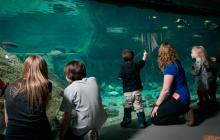
In brief, let your curiosity flow in order to experience the fascination that children feel naturally. For them, it’s always the right time to stop and contemplate something. As we get older it becomes more difficult to wonder at things, perhaps because of our busy day-to-day lives or because our expectations are too high for us to be surprised. Nevertheless, it’s possible to cultivate a sense of wonder by putting aside the time to take an interest in the natural world around us.
Some obstacles to overcome
It’s no surprise that adding value to the ordinary is difficult, because there are some obstacles in our way.
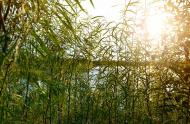
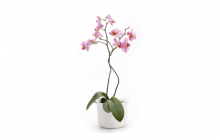
First, there’s plant blindness,4 where our eye is spontaneously attracted to what moves or is colorful, ignoring plants that remain motionless.
Also, there’s an aversion to insects and arthropods that leads a lot of us to avoid them, spiders in particular.5
Finally, our interest tends more in the direction of charismatic, rare or exotic species,6 whereas ordinary nature,7 the nature of everyday life, too often goes unnoticed8 by ordinary mortals.
How can we make contact with ordinary nature?
- Participate in the My Space for Life Garden program by certifying your garden.
- Commit to a Mission Monarch.
- Become a member of the Biodiversity Challenge.
- Meet our Nature Near You teams.
Sources :
- Qu’est-ce que l’émerveillement? – Catherine L'Ecuyer (catherinelecuyer-fr.com)
- Today, I see insects (through my heart’s eyes) | Blog | Espace pour la vie
- Associations between Nature Exposure and Health: A Review of the Evidence - PMC (nih.gov)
- To learn more about plant blindness
- Could arachnophobia be the result of misinformation? | Blog | Espace pour la vie
- Blinded by Beauty: Attractiveness Bias and Accurate Perceptions of Academic Performance | PLOS ONE
- La « nature ordinaire » dans le monde occidental | Cairn.info
- Protégeons-nous davantage les beaux animaux? Oui | Agence Science-Presse (sciencepresse.qc.ca)