








Millipedes, spiders, crabs, and ants all belong to the most abundant group of animals on Earth: the arthropods. They share two key characteristics: as adults, they all have jointed legs and an external skeleton.
In fact, the word arthropod means “jointed foot” (arthro = joint, pode = foot). Their external skeleton, or exoskeleton, forms a protective shell that shields them from impacts, injury, and desiccation (dehydration).
Because they lack a backbone, arthropods are classified as invertebrates.
The major groups of arthropods
Some animals are often mistaken for arthropods but aren’t part of the group. For example, an earthworm has a segmented body, but it has neither legs nor an exoskeleton. It is an annelid, not an arthropod.
Among the major arthropod groups are:
- Hexapods, which include insects such as butterflies and ants.
- Myriapods, such as millipedes and house centipedes.
- Crustaceans, represented by animals like crabs and lobsters.
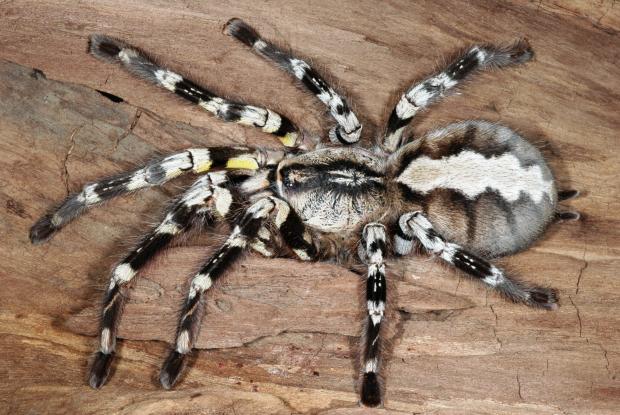
- Chelicerates, which include arachnids such as spiders and scorpions.
Pillars of ecosystems and sources of inspiration
Arthropods are invaluable allies that help maintain the delicate balance of ecosystems. They play key roles in food webs as both prey and predators, contribute to pollination and the decomposition of organic matter, and support soil fertility.
In parallel, arthropods hold an important place in our societies:
In scientific research:
- In environmental protection, where they serve as bioindicators of ecosystem health.
- In human health, for example in the development of pharmaceutical products derived from substances they produce.
- In forensic science, where they provide key information about decomposition processes.
As a source of artistic inspiration: Arthropods spark creativity and hold a meaningful place in many cultures. Both private and museum collections reveal the deep connections between arthropods and major civilizations.
In food security: They offer high nutritional value and serve as a food source for many communities.
As a way to connect with nature: They inspire genuine curiosity, encouraging people to observe them and better understand the natural world.
Unfairly judged unloved creatures
Some arthropod species can sometimes be a nuisance: black flies, mosquitoes, fleas, lice, or bedbugs. They can transmit diseases or cause skin irritation. Others, like spiders, trigger deeply rooted phobias.
Although arthropods aren’t the most popular animals, they are not “bad.” They are simply unfamiliar to us, and often misunderstood.
Information that fuels fear tends to spread more widely than information highlighting their ecological roles and benefits. Getting to know them better helps us understand their importance and learn how to coexist with them.
Species still largely unknown
Despite extensive study, the world of arthropods still has much to reveal. Most species have yet to be described, and some may hold fascinating surprises, from novel behaviours and extraordinary adaptations to molecules with unexpected properties.
This group of animals illustrates the richness and complexity of life. Exploring their world not only deepens our understanding of biodiversity but also opens the door to innovations inspired by nature.