






Année
Votre jardin
Jardin pour la biodiversité
Témoignage
Two years ago, our garden lost its centerpiece, a centennial ash tree which had lost its battle with emerald ash borers. The tree had been home to many birds and a squirrel family, and removing it had destroyed the lawn planted by previous owners.
With the loss of the tree and the front yard in shambles, we decided to try to keep the garden a refuge for the wildlife we had so enjoyed.
First, we reworked two side flower gardens lining the front yard. On one side, we planted tulips and daffodils for early spring, and we plant wildflower annuels and perenniels from seed in order to rotating different flowers throughout the growing seasons. On the other side, we are working on an alpine inspired garden, with rocks (with hiding spots for small creatures), and small grond cover flowering plants (flox, thyme), a small juniper, and lavender. We have also planted a hazelnut tree to slowly grow back a large tree.
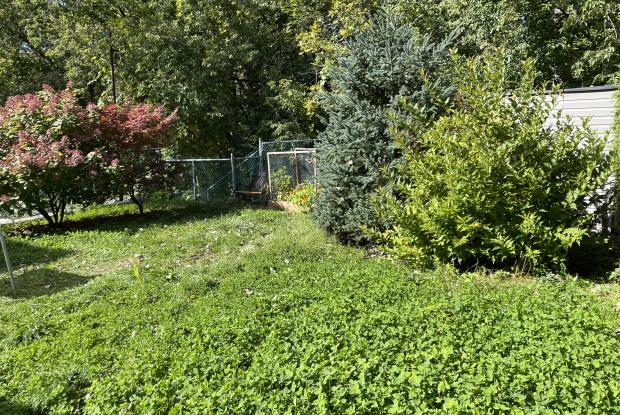
The lawn has been replaced completely with white clover, which we do not need to mow or water. This has probably been the most dramatic change- since we stopped mowing the clover we have seen so many insects that we hadn't seen in years, including grasshoppers and katydids. In the spring, the clover flowers and transforms the front yard into a tiny flower field. There are so many pollinators that you can hear the buzz when standing near the yard. Even with small children, the clover holds up well and the children love rolling around in the soft mounds (except during the flower season with all the bees). Our neighbor's kids so love it that they have also planted clover in their yard.
In the back yard, we have also started slowing replacing grass with clover. We have planted a wildflower garden along one fence, and included a few aromatic perenniels (rosemary, lavender). There is also a conifer small tree, a japanese maple, and two flowering shrubs, one which is loved by pollinators in the fall, the other in the spring.
The both the front and rear gardens are generally covered plants that don't need much watering. When watering, we use rain water from our roof which we collect in a rain barrel. We do not use any pesticides, and only some natural fertilizers. In the fall, we generally leave the last layers of leaves on the ground to protect dormant insects and to provide nurtients to the yard in the spring as the leaves break down.
The entire family enjoys not only the beauty (and low-maintence) of the garden, but also all of the animals and insects that we have starting seeing in the last year or two as the garden takes shape. These include bees of all kinds, crickets, grasshoppers, katydids, many small birds, brown snakes, groundhogs, skunks, as well as a fox once or twice.